Showing posts with label Science Fiction. Show all posts

Tuesday, January 29, 2013

Son

by Lois Lowry
November 2012


"They called her Water Claire. When she washed up on their shore, no one knew that she came from a society where emotions and colors didn’t exist. That she had become a Vessel at age thirteen. That she had carried a Product at age fourteen. That it had been stolen from her body. Claire had a son. But what became of him she never knew. What was his name? Was he even alive?  She was supposed to forget him, but that was impossible. Now Claire will stop at nothing to find her child, even if it means making an unimaginable sacrifice.

Son thrusts readers once again into the chilling world of the Newbery Medal winning book, The Giver, as well as Gathering Blue and Messenger where a new hero emerges. In this thrilling series finale, the startling and long-awaited conclusion to Lois Lowry’s epic tale culminates in a final clash between good and evil." Description from Amazon

At long last - the final book in the Giver series. Although, I am not sure if readers really knew that she was planning to write it. After the Giver ended fans were begging Lois Lowry to explain the ending. Did Jonas die? Did he reach his destination? What happened!!?? Lowry never intended to write three other novels after the first. But she did and now she has brought it all full circle. I won't say that she completed the series or answered all of my questions because I still have many.

This was a satisfying ending to me. I don't think she needs to go further. She could, however, write a prequel and I'd be happy!

Ashen Winter

by Mike Mullin
finished November 7, 2012

This is the sequel to Ashfall, in which a volcano in Yellowstone erupts, forever changes life in the United States and brings on an eternal winter.
Alex and Darla have been living with his aunt and uncle and getting by, thanks to Uncle Paul's ingenuity and early preparations. They've been able to grow some food, particularly kale. Kale apparently grows well in harsh conditions.

Alex decides he's got to go find his parents who left to find him.  He and Darla set out on a jury-rigged ski bike  to go towards Iowa. Most likely his parents were headed there as well.

It's a harrowing journey, particularly because of the gangs of "flensers." These are gangs of cannibals who hunt and kill humans for food and to sell to others.

Freaky.   It's an exciting story with some unbelievable elements. I know that there would be many criminals and many people out for themselves in such a disaster, but I believe that there would be more good will and love than is portrayed here.

Still, I liked the book.  I'd like to see Mullin write a book in which the ashen winter begins to subside and people start to get back to "normal."


Thursday, November 8, 2012

The Age of Miracles

by Karen Thompson Walker
September 24, 2012

A friend told me about this book. It's an end-of-the-world (or dystopian, as the genre is now called) book that takes place after the earth's rotation slows.  The publisher's description says,
"the world is ending not with a bang so much as a long, drawn-out whimper. And it turns out the whimper can be a lot harder to cope with."
The interesting thing about this book, as with all end-of-the-world books, is how life changes and how people adapt after a world wide disaster.

The first thing that everyone notices is that time goes off kilter. Six o'clock is no longer six o'clock. Hours are no longer sixty minutes.  Things quickly begin to get difficult because life's normal routine must either work by the clock or by the sun's rising and setting.  It's decided that everyone would continue to live by the clock.  Eventually the school day is held completely in the dark.  "White nights" - nights fully lit by the sun - last for hours and hours.
Some people choose not to live by the clock but to continue living according to natures rhythms.  Tensions build and neighbors turn against each other.

As the rotation continues to slow, more problems occur. The earth's magnetic field begins to disappear.  It becomes extremely dangerous to go outside in the daylight hours.  Plants begin to die, animals migration patterns are disrupted.

It's all very interesting, but Walker hasn't really written a science fiction novel. Her book is more of a coming-of-age story for her main character, eleven year old Julia.    Maybe the end-of-the-world is must a metaphor for the process of entering adolescence.  Think about it - sometimes for a pre-teen life is full of disasters. It can feel like the end of the world when that boy you like snubs you or your best friend finds a new best friend.  Julia deals with these and other life problems while dealing with the slowing of the earth's rotation.

I liked the book. It ended a little bit too quickly and too ambiguously. Lots of questions were left unanswered and I'm not sure if that was to keep us thinking or because the author didn't know how to end the end-of-the-world.

This could have and maybe should have been a YA book, but it was cataloged into the adult section of the library and has been marketed to adults by the publisher.

Thursday, May 10, 2012

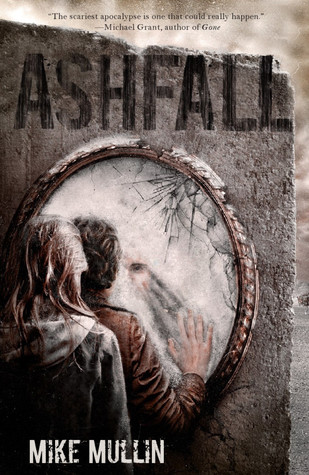
Ashfall

by Mike Mullin
April 2012

One Friday evening 15 year old Alex is home alone, messing around on the computer when the earth starts to rumble and the lights in the house go out. An earthquake? Unlikely, since Alex is in the middle of Iowa. Then all hell breaks loose. The floor tilts and the ceiling crashes in. Later a loud roar sounds out, like a never-ending clap of thunder.  It isn't long before Alex finds out that the Yellowstone supervolcano has erupted and life will never be the same.  He sets out to find his parents and little sister who had gone to visit relatives in Illinois for the weekend.

Ashfall  is the story of Alex's journey to Illinois. It's a survival story as he battles hunger, robbers, sudden winter and ashfall.

I liked this book and hate think that this (the supervolcano) could actually happen.  I wonder, however, if we, as a people, would degenerate as fast as the people in this book.  Almost immediately Alex encounters violent criminals. He also encounters communities of people banded together, but the threat of bad people begins so quickly.   On second thought - looting after Hurricane Katrina or the looting and rioting last year in London in August of 2011 after a protest in Tottenham - I suppose it could happen that fast.

It helps the plot of Ashfall that it takes place mostly in rural Iowa. Along Alex's journey houses are few and far between. This would have been a different story had it taken place in a large city.

Mike Mullin does a good job of taking Alex from spoiled teenager into a manhood forced upon him by adversity. Alex is the narrator of the story and his voice subtly changes as moves through his ordeal.

This is Alex's story, but I wanted to know more about how the nation handled the disaster. We get a terrible glimpse of it when Alex and his traveling companion reach a refugee camp which ends up being more like a concentration camp.  But what about the rest of the country?

The sequel Ashen Winter will be released in October so maybe I'll have my answer then.

Friday, May 4, 2012

Catching Fire and Mockingjay

by Suzanne Collins
February 2012

It's unbelievable that I was able to read these one right after the other. Right about the time I started this series, interest peaked among library patrons because of the release of the movie.  There were over 200 people on the waiting list for the first novel, The Hunger Games.

I bought an e-book of Catching Fire  for $5 from Barnes and Noble. By the time I finished it, my hold on a library's copy of Mockingjay came up.
Wow. I loved this whole series.  The excitement kept up right to the very end.
I was slightly disappointed with the conclusion of the action (not the conclusion of the book). I didn't like the way that Collins dealt with President Snow.

But I was very satisfied with the whole series. A fun, exciting set of books.

Lionboy the Chase and Lionboy the Truth


by Zizou Corder
October 2011

The Chase is the second book in the Lionboy trilogy and The Truth is the third.  I read The Chase (because  the library didn't have an audio version) and listened to The Truth, narrated by the fabulous Simon Jones.

The Chase follows Charlie Ashanti into Venice and then to Ghana as he continues looking for his kidnapped parents.   This was my favorite of the trilogy.   The Truth concludes the story.


Note:  I began writing my summary and review of this book back in October 2011. For some reason, I never finished. Now it's May 2012.

I can't remember enough to give a detailed account of the two books, but I will say that I really enjoyed them.
The Chase takes place in Venice - a nice setting. The Truth continues the action into Africa. This trilogy is a good, fun, science fiction series.

Saturday, January 28, 2012

The Hunger Games

by Suzanne Collins
January 2012

Everybody's reading The Hunger Games.  Everybody's been reading The Hunger Games for a long while now.  This is the first in a trilogy of books that has remained popular for several years now. I finally decided to see what the fuss was all about but couldn't get my hands on a copy. Thanks to a Barnes and Noble gift certificate and my  Nook, I finally joined the club.

It's a good book and an exciting read. I imagine that the popularity of the book grew with the publication of the other two titles in the trilogy.
The Hunger Games is set sometime in the future. The land mass of North America has shrunk due to global nuclear war, changes in the climate, and through natural disasters.  The United States is no more - now the country is known as Panem and is made up of twelve districts.  The capitol city is located in the Rocky Mountains.  About 75 years before this novel begins, the districts rebelled against the Capitol. One of the districts (number 13) was destroyed and the rebellion was put down. As a punishment for the rebellion, all of the districts were ordered to participate in "The Hunger Games."

The Capitol is like ancient Rome and the Games are akin to the gladiator's games.  In fact, the residents of the Capitol have names like Cinna, Octavius, and Flavius.    There are 24 participants, or "tributes": one girl and one boy chosen from among the teenagers in each district.  Once a child turns twelve, he or she must enter his/her name into a lottery. The obligation to enter the lottery ends when the child turns 19.

It's considered an honor to be chosen and the tributes are treated like celebrities during the weeks leading up to the games.  But the games are a necessary evil because the winner is the person that is still alive at the end.  Because this story is set in the future, the games have somewhat of a high-tech quality.   The setting and circumstances of each game change from year to year. They always take place in an arena, but to the tributes, it could look like a forest or a desert or an icy wasteland.  The year that Katniss, the hero of our book, becomes a tribute the setting is a forest.  Fortunate for her, because she has spent most of her life hunting for food in the woods near her home.

The high-tech stuff comes in the way that the Gamemakers manipulate the environment.  The whole game is televised, so if things start to become boring the Gamemakers can start a thunderstorm or bring in a cold wind.

I enjoyed this book a lot and am ready to read "Catching Fire," the next book in the trilogy.  The world that Suzanne Collins created and the games themselves are a fascinating invention.  I can see why this series has become so very popular.

Sunday, December 18, 2011

The Fox Inheritance

by Mary E. Pearson
December 2011


This is a sequel to The Adoration of Jenna Fox.
About 250 years after the events in the first book, Locke and Kara's minds have been uploaded into new bodies. Their bodies are completely synthetic, made up of a substance called BioPerfect.  Locke narrates the story of his and Kara's quest to escape the scientist who would use them as "floor models" for potential clients.  This is also a quest to learn how to live in a society so completely different from the one that they left two hundred fifty years before.
As with the first book, The Fox Inheritance explores the themes of medial ethics, the soul, and what it means to be human. Locke and Kara were prisoners in a dark, isolated world for two and a half centuries. Are they old or are they still the teenagers they were when they "died" in a car accident so long ago?

A worthy sequel.   Will it become a trilogy?  The author hints that it will be.

Wednesday, August 31, 2011

Lionboy

by Zizou Corder
August 2011
"Zizou is a creature of mystery who likes accordion music, dancing in chandeliers and telling stories. She was born in a Hungarian nightclub, to a Circus Family, and now sails the world in a blue canoe hoping that one day she will find an orchestra up a tree."
Actually, Zizou Corder "is Louisa Young and Isabel Adomahko Young, whose names are too long to fit on the front of a book."  In the posts on Zizou's blog, Zizou is referred to as a male. His(her?) name comes from a pet lizard.

I had been wanting to read this book for a while. The cover caught my attention. I always assumed it took place in Africa. I had no idea it was a somewhat of a fantasy adventure set in London, Paris and Venice in the near future and featured a floating circus.  But these things made me like the story even more than I had thought I would.

11 year old Charlie comes home from school one day to find that his scientist parents, "Magdalen Start, PHD, MD, PQRST, LPO, TP" and "Aneba Ashanti, Doctor of Endoterica and Tropical Sciences at the University of Accra in Ghana, (currently on sabbatical at London University) " have been kidnapped. Whatever they had been working on in their secret laboratory was obviously of interest to a person or persons unknown.  Luckily, Charlie can talk to cats. The strays that live at the nearby ruins tell him what has happened, but not much else.  He manages to escape from the "fancy slimy git" named Rafi who has tried to nab him as well, and goes off in search of more clues as to his parents' whereabouts.  

Charlie ends up on a floating circus called "Thibaudet's Royal Floating Circus and Equestrian Philharmonic Academy." This is where he meets a pride of performing lions and where he aquires the nickname Lionboy.  

Charlie has no idea why his parents have been kidnapped. They never told him about their latest research project. The cats he encounters along the way know something, but they aren't very forthcoming with information.  Charlie has to piece together various clues which lead him closer to his parent's location and their secret project.

The book doesn't really end, but leaves us with the words "to be continued."  This is a trilogy. Book two is Lionboy: the Chase. The conclusion is Lionboy: the Truth."

I love that the book started as a series of bedtime stories told by Louisa to her daughter Isabel. According to an interview in Audiofile magazine, "The collaboration process gives Louisa constant access to another imagination. They discuss escape routes for lions or names for acrobats. Louisa types up the scenes, Isabel reads them, and they revise together."

I listened to the audiobook. Actually, what made me finally pick this book up to read (listen to) was the narrator - the fabulous Simon Jones, whose voice and reading I fell in love with while listening to him narrate the Bartimeus Trilogy.  Interestingly, Jones does not narrate the British audiobook. His is the American edition.  From the Audiofile interview:  
"Young Isabel likes to listen to audiobooks; whereas, Louisa likes to “read books for the silence.” They listen to audiobooks together in the car, though, and it was there that they first heard narrator Anton Lesser reading Philip Pullman’s RUBY IN THE SMOKE. Anton Lesser reads the UK audiobook production of LIONBOY at their request, and Simon Jones narrates the American audiobook. After eight years of telling each other stories from LIONBOY, it’s surprising to hear it read by someone else. When Louisa listened to Jones’s version, she found herself wondering what was going to happen next."
That last line - "...she found herself wondering what was going to happen next" - that's because Simon Jones is so good you find yourself getting completely absorbed in the story.
One sort of odd thing about this audiobook is the music. At various times throughout the book music plays behind the narration. Sometimes it makes sense, as in the calliope music of the circus boat. Other times, the music seems added randomly.  When I picked up the book itself to look at the spelling of a couple of characters' names, I saw that music is actually printed in the book.   I'm not quite sure why it's so, but apparently it was important to the authors to include it. In fact, you can buy a book of the piano music with a CD - Music from Zizou Corder's Lion Boy by Robert Lockhart.

Besides realizing the music was in the printed book, I found that there are some neat illustrations, including a map on each endpaper as well as a diagram of the circus boat.

Fortunately, the added pleasure of the illustrations will get me through the second book because,  unfortunately, the library doesn't own the audiobook of Lionboy: the Chase.  I'll have to read it in order to get to the third book, narrated by the fabulous Simon Jones.


Thursday, January 6, 2011

The Night of the Scorpion and Evil Star


by Anthony Horowitz
Finished January 2011

I was evaluating part of our fiction collection, checking to see what series needed re-ordering when I came across The Night of the Scorpion by Anthony Horowitz. All I really knew about Horowitz was that he wrote a spy adventure series about a character named Alex Rider. This book, however, was written back in the mid-80s. It's part of the "Pentagram Series." Investigating this title a little further I found that Horowitz rewrote the entire series under the series title The Gatekeepers. The Night of the Scorpion became Evil Star. How fascinating! The Pentagram series must not have done very much for the author because he only wrote four of the planned five books. Years later, after finding fame with the Alex Rider books, he revisited the series, fleshed it out and named it The Gatekeepers (The Power of Five, in England).

I didn't have the first book in the Pentagram series, so I read the second book in each. They both involve a young man (Matt, in the later book) who discovers that he has an unusual power. I'm not quite sure what his power actually is and neither is Matt. It's an unexplored power that shows up when he least expects it. Matt is one of five gatekeepers. He's destined to stop The Old Ones who are evil beings that were banished to an underworld or other dimension. In this book, Matt meets the second of the five gatekeepers. Pedro is a native of Peru, where Matt and his guardian Fabian are led to encounter the Old Ones.

Horowitz's writing has improved over the years. Evil Star is filled with more detail than Night of the Scorpion. Some plot points that were too coincidental or convenient in the first book were changed in the second. Matt's character has changed as well. The first book has him almost innocently accepting his new found power. He's an orphan that now lives with a journalist named Fabian (I can't remember his name in the Scorpion book). He and his guardian remind me of Bruce Wayne and Dick Grayson. The second book is more realistic in the way that Matt and Fabian end up together. Matt is also more rebellious and unaccepting of his new power. The plot of Scorpion is resolved much too quickly.

These were both good fantasy books, but I prefer Evil Star to Night of the Scorpion. There's an element of mystery and adventure along with the fantasy.

Tuesday, May 18, 2010

Last Survivor Series

by Susan Beth Pfeffer
Read these May 2010
.
Life As We Knew It
The Dead & the Gone
This World We Live In
.
.
One evening in May everyone in the neighborhood went outside to sit in lawn chairs and have cookouts. They were having asteroid parties. Everyone wanted to see the big asteroid hit the moon. Soon enough the party atmosphere turned to panic. The asteroid knocked the moon out of its normal orbit and closer to the earth.
.
Life As We Knew It begins this trilogy of life after disaster. It's format is a teenager girl's diary. Miranda, her brother Jon and mother Laura live in the country just outside of a small town in Pennsylvania (I think). This is the story of their survival. At first, only electricity is effected and only intermittently. But Miranda's mother wisely prepares for the worst and stocks up on canned goods and winter clothes. Her instinct turns out to be correct as life gets more and more difficult. Because the gravitational pull of the moon has been altered, earthquakes and tsunamis happen all over the world. For a while, the family survives on food grown in the garden. As the skies fill with ash from volcanoes that have erupted throughout the world, food becomes more and more scarce.
.
This is an interesting story. How would one survive if life as we knew it changed completely?
I enjoyed the second book more. It takes place in New York City and tells the story of Alex, Julie and Brianna Morales. Surviving in the city is sometimes easier and sometimes much more horrible. I think I liked this book because of the religious theme running throughout.
Miranda, in the first book, has really no ties to religion at all. One of her friends has become a fundamentalist holy roller and sees the disaster as God's way of punishing mankind.
In The Dead and the Gone, however, religion is portrayed in a much better light. Alex and his sisters are Catholic. It's the anchor that gets them through the disaster.
.
Finally, the book This World We Live In is disappointing. It's Miranda's diary again and it's simply more of the same survival story in a way. But the appearance of Alex and Julie change things. I liked Alex's story so much that I resented it becoming a part of whiny Miranda's diary.
The story is bleak and not filled with much hope at all. I don't know if Susan Beth Pfeffer plans to write any more. I hope she does, because the reader has to know that life will go on.
.
These books have been criticized for bad science. I'll agree. And I'll add that the world would not be caught off guard by an asteroid of that size. Even if nothing could have been done about it, the news media would be all over the story. The earthquakes, volcanoes and tsunamis would have been predicted.
.
I'll also add that I don't think the United States would become such a desolate place. I just heard someone say on a news show about Haiti that Americans are "fix it" people. We want to fix things rather than letting them just lay there broken. I think Pfeffer's view of the end-of-the-world-as-we-know-it is overly pessimistic.
Still, I enjoyed this series.

Friday, January 22, 2010

Witch & Wizard


by James Patterson with Gabrielle Charbonnet
Finished January 23, 2010

Daddy bought this book in Kroger while we were in Houston. He thought it was a regular James Patterson novel. I think he stopped reading it about the time he said to me, "This is a children's book!?"

He didn't know that Patterson is now in the Teen Lit business. He does actually write some of his books for younger readers. As far as I can tell, he's the sole author of the Alex Cross books and the Maximum Ride books. But Daniel X, and now Witch and Wizard, are co-written. What that means, according to Gabrielle Cahrbonnet's website, is that Patterson

provides a detailed outline, every chapter, scene by scene, as well as backstory and commentary. And we talk about it. Then I write a rough draft and send it to him in chunks. He reads it and gives me feedback. He's very clear about what's working and what's not working. He's generous with praise and constructive with criticism.

Well, Jim... you're not constructive enough, I think. This book has a fairly interesting plot, although it's nothing unique. An authoritative dictatorship has taken over .... the country? The world? (It's not clear). Whit and Wisty, brother and sister, are taken from their homes by the thugs of the New Order. The One Who Is The One has ordered that they be taken to prison because they have been determined to be "Extremely Dangerous."

Why are they dangerous? That's what Whit and Wisty want to know. They have grown up not knowing about their powers. Right before the New Order guard take them away, Mom and Dad give Whit and Wisty a book and a drumstick. Unbeknownst to the two, it's a book of magic and a witches' wand in disguise. Wisty and Whit are Witch and Wizard. They slowly learn to use their powers, which help them get out of prison and other tight spots.

Why doesn't the New Order guard take away the book and the drumstick? I don't know.

Apparently, the grownups of the N.O. have decided that children are immoral and bothersome. They've rounded just about all of them up and put them in prisons and have even tortured them. I don't know why. It's up to Wisty and Whit to free them. All of the freed children live in a giant department store. Why the N.O. don't know about the "hideout", I don't know.

But the "grownups are bad and kids can run the world much better" theme reminds me of the Prez comic book series from the 1970's. Prez was a teen president. Because back in the 1970's it was all about never trusting anyone over 30.

The writing in this book is awful, but it's not an entirely worthless book. Some kids will enjoy it. Because it's a series and ends with a cliffhanger, they're sure to grab the next installment.

Patterson's name sells. This is a good thing for the likes of Gabrielle Charbonet, who up to now has written hack paperback series like "Disney Girls", "American Gold Gymnasts" and several books based on Disney movies. Ms. Charbonet is thrilled to finally be the author of bestselling novels. It was a lucky day she met James Patterson.

UPDATE:  We just got  the third book in this series today. I noticed that it's by a different author - not Gabrielle Charbonet.  On checking, I saw that yet another author wrote the second book.  I looked up Gabrielle Charbonet to find her website again and couldn't find a trace of it.  What I did find was that Gabrielle Charbonet has been writing under a pen name for many years - Cait Tiernan.  Since about 2001,  she has written, under the Tiernan name, a series of Wicca fantasies called The Sweep.  She has two more series, Balefire and Immortal Beloved.
How interesting.  When I read Charbonet's website, it was so gushing and golly-mr-patterson, that I got a completely different impression of her. I perceived her as someone who had written nothing but hack-factory paperback series.  Now, I don't know anything about the three Tiernan series. They could also be junk series books as well. Who knows?    What is very very interesting is that Charbonet's website is gone. There is no mention at all of Charbonet, James Patterson or Witch and Wizard on Tiernan's website.  I wonder what happened? Was there a falling out between Charbonet and Patterson? Was it Patterson's plan all along to use different authors?  The third author - Jill Dembowski - is an editor at a publishing company.   The second author is Ned Rust. I can't find anything that he's done other than a couple of Daniel X books - more James Patterson.
My theory is that Gabrielle Charbonet was getting a little too much of a big head over being the author of Witch and Wizard.   Enter Ned Rust. He didn't get great reviews.  So Patterson just went with an editor. Maybe the editor Jill Dembowski follows orders better than the two.  That's my theory anyway.
James Patterson...writing machine, live action!

Tuesday, August 11, 2009

Second Time Around

by Nancy Moser
Finished August 10, 2009

This is the sequel to The Time Lottery. It was an enjoyable book, but not as good as the first book. She did a fairly good job of explaining important plot points from the first book without boring those who had alredy read it.

But, she did repeat some of the themes and characters - the greedy, selfish characters; the wise church-goer; the unethical media people.

Three more characters get the chance to go back in time to change their lives and correct past mistakes. The media causes problems when they dig up dirt on the three Time Lottery winners. Greedy family members hope to profit from their loved one's trip to the past.

Still, I enjoyed reading it and would probably read another if Nancy Moser would write one. I read descriptions of some of her other books. She's got great ideas, but her writing style just doesn't do justice to her ideas.

The Time Lottery books would make a good TV series.

Friday, August 7, 2009

Time Lottery

by Nancy Moser
Finished August 7, 2009

The time travel theme caught my attention. But this isn't a science fiction book. It's a Christian Fiction novel. As such, it gets a little preachy at times, but it is an enjoyable read.

The TTC (Time Travel Corporation) has developed a way to travel back into time. They've decided to offer three people an opportunity to be the first to go back in time. It's advertised as an opportunity to go back and right a wrong or solve a regret. It isn't presented as simply a chance to relive some good times.
The time travelers are given a serum that allows them to travel in time. They are placed into a coma. When a weeks time is up, they are given "dual consciousness." The time traveler will be conscious of his place in the past as well as the present (the future?). At that point he can decide whether to stay in the past or to return to his own time. If he decides to stay, his present body dies.

The science in this book isn't very logical. As I said, it isn't a science fiction book. The time travel device is simply there to carry the theme of addressing past mistakes and regrets.

As a Christian, I didn't mind the preachy-ness. Although it got a bit heavy handed at times. Some of the events were too unrealistic, even for a book in the realm of sci-fi.

In all, it was a satisfying read and I plan to read the sequel, Second Time Around.

Friday, July 10, 2009

The Adoration of Jenna Fox

by Mary E. Pearson
I wanted to read a science fiction book. Browsing through the Teen section at the library I found this one. The title attracted me. The description hooked me.
"Seventeen year old Jenna has been told that is her name. She has just awoken from a year long coma, and she's still recovering from teh terrible accident that caused it. Her parents show her home movies of her life, her memories, but she has no recollection. Is she really the same girl she sees on the screen?
Little by little, Jenna begins to remember. Along with the memories come questions - questions no one wants to answer for her. What really happened after the accident? In this fascinating novel, acclaimed author Mary E. Pearson presents an unforgetable look at one human life and a glimpse into a possible future that may be closer than we think."
I like stories of the "near future" - stories in which the world is recognizable, but changed.
It didn't take long to suspect that something strange had happened to Jenna during her coma. I was close, but I made the wrong guess, however. I thought that he body had been replaced by a robot. What actually happened to Jenna was the stuff of science fiction but it was close enought to reality that it generated lots of thought in my mind. This book would be great for a book discussion group. Medical ethics...the nature of the Soul...possibilities of scientific experimentation....what it means to be authentically human.

Wednesday, September 17, 2008

Invasion of the Body Snatchers


by Jack Finney
Read September 2008

I listened to this on a Playaway. I'd seen the movie and don't think I ever knew it was a book.

I enjoyed this. It was exciting and a good science fiction story. I had a hard time deciding what time period this was set in. I thought it may have been the 1950's but there were references that made me think it was set much later. Hmm.

Not much to say about this one. The original movie may have been about hysteria surrounding the red scare or communism. The book was about mass hysteria in general.

As Tommy Lee Jones said in Men in Black, "A person is smart. People are dumb,panicky, dangerous animals..."