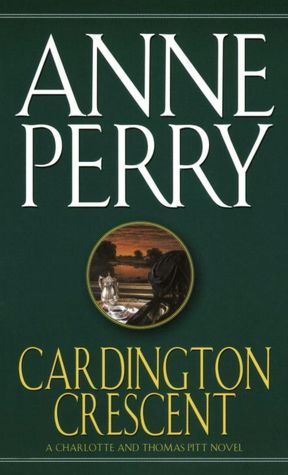
by Anne Perry
May 7, 2013
It's spring, so this must be a Charlotte and Thomas Pitt mystery.
I'm a little behind writing the summaries of books I read this summer, so here's a description from Amazon:
The horrifying rape and apparent suicide of Catherine Quixwood, wife of a wealthy merchant banker, falls outside the new jurisdiction of Special Branch head Thomas Pitt, but so pervasively offensive are the rumors about the victim that Pitt quietly takes a hand in the investigation. Yet even with the help of his ingenious wife, Charlotte, and his former superior, Victor Narraway, Pitt is stumped. Why did high-minded, cultured Catherine chose not to accompany her husband to a grand party on the night of her demise? Why did she dismiss all her servants for the evening and leave the front door unlocked? What had been her relationship with the young man seen frequently by her side at concerts and art exhibits? And what can be doen to avenge another terrible crime: the assault on Angeles Castelbranco, beloved teenaged daughter of the Portugese ambassador?
I liked this book, but I can't remember very many of the detals. It was a routine Pitt mystery - which is a good thing. We've moved on from the foreign relations stuff. Victor Narraway gets a bigger role in this book. That's a good thing, too.
I suppose there'll be another Pitt book in the spring. We'll be able to see what develops between Narraway and Vespasia!
I just checked Amazon UK - the next book Death on Blackheath will be released in two days in England. I suppose I could buy it for Kindle and read it now. Or I could wait fr the traditional US spring release. I must uphold tradition!
.
Showing posts with label Charlotte and Thomas Pitt. Show all posts
Wednesday, September 11, 2013
Sunday, December 16, 2012
A Christmas Secret
by Anne Perry
December 2012
In addition to Perry's Monk and Pitt mysteries, she has written a series of eight (so far) Christmas novellas. They are all set during the holiday time and each features one of the minor characters from the Pitt or Monk books.
The protagonist of A Christmas Secret is Dominic Corde and his wife Clarice. This obviously takes place after Brunswick Gardens because Dominic and Clarice had not yet married in that book.
I thought, even when reading Brunswick Gardens, that the author should feature Dominic in his own book. So it's no wonder that I enjoyed this book so much.
The Pitt and Monk books so often involve some social issue. It was nice to read an Anne Perry book that was simply a mystery.
I found this to be timely since my Sunday School class (2nd graders) are preparing for their First Confession this Advent. There were some nice thoughts on the matter.
I like this series of novellas and the fact that they feature minor characters from other books.
A Christmas Journey (2003) A young Lady Vespasia Cumming-Gould (A Pitt character)
A Christmas Visitor (2004) Henry Rathbone (A Monk character)
A Christmas Guest (2005) Grandmama Ellison (Pitt)
A Christmas Secret (2006) Dominic and Clarice Corde (Pitt)
A Christmas Beginning (2007) Superintendent Runcorn (Monk)
A Christmas Grace (2008) Emily Radley (Pitt)
A Christmas Promise (2009) Gracie Phipps and Minnie Maude Mudway (Pitt)
A Christmas Odyssey (2010) Henry Rathbone, Squeaky Robinson and Crow (Monk)
A Christmas Homecoming (2011) Caroline and Joshua Fielding (Pitt)
A Christmas Garland (2012) A young Victor Narraway (Pitt)
December 2012
In addition to Perry's Monk and Pitt mysteries, she has written a series of eight (so far) Christmas novellas. They are all set during the holiday time and each features one of the minor characters from the Pitt or Monk books.
The protagonist of A Christmas Secret is Dominic Corde and his wife Clarice. This obviously takes place after Brunswick Gardens because Dominic and Clarice had not yet married in that book.
I thought, even when reading Brunswick Gardens, that the author should feature Dominic in his own book. So it's no wonder that I enjoyed this book so much.
The Pitt and Monk books so often involve some social issue. It was nice to read an Anne Perry book that was simply a mystery.
"Dominic Corde is thrilled to 'fill the robe' as substitute vicar in the village of Cottisham while the Rev. Wynter is away on leave. Dominic and his new wife Clarice arrive during an exceptionally frigid and snowy season. The welcoming and cozy vicarage and the hospitable neighbours seem all too perfect..."The mystery involves the Rev. Wynter's whereabouts. Although this is a simple mystery and doesn't involve Victorian social issues, it does have a message. Forgiveness.
I found this to be timely since my Sunday School class (2nd graders) are preparing for their First Confession this Advent. There were some nice thoughts on the matter.
I like this series of novellas and the fact that they feature minor characters from other books.
A Christmas Journey (2003) A young Lady Vespasia Cumming-Gould (A Pitt character)
A Christmas Visitor (2004) Henry Rathbone (A Monk character)
A Christmas Guest (2005) Grandmama Ellison (Pitt)
A Christmas Secret (2006) Dominic and Clarice Corde (Pitt)
A Christmas Beginning (2007) Superintendent Runcorn (Monk)
A Christmas Grace (2008) Emily Radley (Pitt)
A Christmas Promise (2009) Gracie Phipps and Minnie Maude Mudway (Pitt)
A Christmas Odyssey (2010) Henry Rathbone, Squeaky Robinson and Crow (Monk)
A Christmas Homecoming (2011) Caroline and Joshua Fielding (Pitt)
A Christmas Garland (2012) A young Victor Narraway (Pitt)
Thursday, November 8, 2012
Fini!
Fall of 2012
I finally finished reading all of the Thomas and Charlotte Pitt mysteries and all of the Monk mysteries! Done... at least until next spring when a new Pitt mystery will be released. And, of course, there are the Christmas novelettes. But for now, I'm finished.
Seven Dials, Long Spoon Lane, Buckingham Palace Gardens,
Treason at Lisson Grove and Dorchester Terrace.
In the last five books, Pitt remains with Special Branch. There's always a murder because these are murder mysteries, after all. But now the books are more political in tone. Special Branch is a branch of the British government that deals with anarchists, insurrectionists and threats to the Crown. I didn't like the change tone at first, but I suppose it has grown on me.
Next month I'll read a couple of the Christmas novelettes and wait until April for Midnight at Marble Arch.
Tuesday, September 4, 2012
Pitt Books
by Anne Perry
Summer 2012
Individual posts on these Anne Perry books are getting tedious. The books are getting really good - she has opened up the plots of her Pitt series by bringing some of the peripheral characters to the forefront. Grandmother Ellison, Caroline, Gracie, Dominic Cord and Tellman have major roles in this set of books. Pitt's job has changed and the villains have become less generic and more threatening to our hero.
I'll just add simple descriptions of each novel (from Perry's website) so that later I can remind myself of what each one is about.
"In affluent Brunswick Gardens the battle over Charles Darwin’s revolutionary theory of evolution intensifies as the respected Reverend Parmenter is boldly challenged by his beautiful assistant, Unity Bellwood, a ‘new woman’, whose feminism and aggressive Darwinism he finds appalling. When Unity, three months pregnant, tumbles down the staircase to her death, Pitt is certain that one of the three deeply devout men in the house has committed the murder, but which one..."
"The freshly dead body sprawled on the doorstep of General Brandon Ballantyne’s home, is an affront to every respectable sensitivity. The general denies all knowledge of the shabbily dressed victim, but Pitt does not believe him. In the dead man’s pocket he finds a rare snuff box that up until recently graced the general’s study. Pitt must tread carefully as it seems that many men, including his own police boss, are deeply involved in a complex web of blackmail, and further deaths may follow..."
[The "Inner Circle" rears it's ugly head again]
"For Pitt, the sight of a dead man riding the morning tide of the Thames is unforgettable. He lies in a battered punt drifting through the morning mist, his arms and legs chained to the sides of the boat, flowers strewn over his body. Pitt’s search for the victim’s identity leads him into London’s bohemia to the theatre where beautiful Cecily Antrim is outraging society with her bold portrayal of modern woman, and into the studios where masters of light and shadow are experimenting with the fascinating new art of photography." [This was a good one! But, as is often the case with the Pitt books, the ending was a bit unsatisfying. Grandmother Ellison and Caroline are especially featured here.]
"It is Spring, 1892 and Queen Victoria persists in her life of self-absorbed seclusion. The grisly killings of Whitechapel prostitutes by Jack the Ripper remain a frightening enigma. In a packed Old Bailey courtroom, distinguished old soldier John Adinett is sentenced to hang for the inexplicable murder of his friend Martin Fetters. It should be a time for Pitt to rejoice and bask in the praise of his superiors, but through the machinations of the Inner Circle he is sacked from Bow Street and transferred to Special Branch. Far from his family and home he is now in the squalid and dangerous slums of London’s East End, but Gracie, the maid, is there to help him..."
[Vespasia plays a small, but critical role]
"Charles Voisey, of the Inner Circle, plans to run for Parliament against the Liberal candidate, Aubrey Serracold, whose wife attends séances in Southampton Row. But when the stylish clairvoyant is found brutally murdered the scandal could damage Serracold’s reputation and allow Voisey the chance to sweep to power and corrupt Parliament from within. Emily, wife of an MP, steps in to help Pitt with his investigations, as Charlotte and the children are away on holiday at the coast, but are they free from danger...?"
[Timely. I read this while the Republican Convention was going on. This book is quite a bit about politics and the whole political game of running for office.]
Summer 2012
Individual posts on these Anne Perry books are getting tedious. The books are getting really good - she has opened up the plots of her Pitt series by bringing some of the peripheral characters to the forefront. Grandmother Ellison, Caroline, Gracie, Dominic Cord and Tellman have major roles in this set of books. Pitt's job has changed and the villains have become less generic and more threatening to our hero.
I'll just add simple descriptions of each novel (from Perry's website) so that later I can remind myself of what each one is about.
"In affluent Brunswick Gardens the battle over Charles Darwin’s revolutionary theory of evolution intensifies as the respected Reverend Parmenter is boldly challenged by his beautiful assistant, Unity Bellwood, a ‘new woman’, whose feminism and aggressive Darwinism he finds appalling. When Unity, three months pregnant, tumbles down the staircase to her death, Pitt is certain that one of the three deeply devout men in the house has committed the murder, but which one..."
[Dominic Cord is featured in this one]
"The freshly dead body sprawled on the doorstep of General Brandon Ballantyne’s home, is an affront to every respectable sensitivity. The general denies all knowledge of the shabbily dressed victim, but Pitt does not believe him. In the dead man’s pocket he finds a rare snuff box that up until recently graced the general’s study. Pitt must tread carefully as it seems that many men, including his own police boss, are deeply involved in a complex web of blackmail, and further deaths may follow..."
[The "Inner Circle" rears it's ugly head again]
"For Pitt, the sight of a dead man riding the morning tide of the Thames is unforgettable. He lies in a battered punt drifting through the morning mist, his arms and legs chained to the sides of the boat, flowers strewn over his body. Pitt’s search for the victim’s identity leads him into London’s bohemia to the theatre where beautiful Cecily Antrim is outraging society with her bold portrayal of modern woman, and into the studios where masters of light and shadow are experimenting with the fascinating new art of photography." [This was a good one! But, as is often the case with the Pitt books, the ending was a bit unsatisfying. Grandmother Ellison and Caroline are especially featured here.]
"It is Spring, 1892 and Queen Victoria persists in her life of self-absorbed seclusion. The grisly killings of Whitechapel prostitutes by Jack the Ripper remain a frightening enigma. In a packed Old Bailey courtroom, distinguished old soldier John Adinett is sentenced to hang for the inexplicable murder of his friend Martin Fetters. It should be a time for Pitt to rejoice and bask in the praise of his superiors, but through the machinations of the Inner Circle he is sacked from Bow Street and transferred to Special Branch. Far from his family and home he is now in the squalid and dangerous slums of London’s East End, but Gracie, the maid, is there to help him..."
[Vespasia plays a small, but critical role]
"Charles Voisey, of the Inner Circle, plans to run for Parliament against the Liberal candidate, Aubrey Serracold, whose wife attends séances in Southampton Row. But when the stylish clairvoyant is found brutally murdered the scandal could damage Serracold’s reputation and allow Voisey the chance to sweep to power and corrupt Parliament from within. Emily, wife of an MP, steps in to help Pitt with his investigations, as Charlotte and the children are away on holiday at the coast, but are they free from danger...?"
[Timely. I read this while the Republican Convention was going on. This book is quite a bit about politics and the whole political game of running for office.]
Thursday, August 2, 2012
Ashworth Hall
by Anne Perry
July 2012
I'm still on the Anne Perry kick.
Perry's plots are getting more interesting. This one involves a murder that takes place at Ashworth Hall, Emily's country estate. She and Jack are hosting a conference between Protestant Irish and Catholic Irish representatives. They are, of course, talking about "the Irish question." Thomas is asked to attend the conference along with Inspector Tellman in case there is any trouble. Thomas can blend in because it is natural that he and Charlotte might be visiting Emily's estate.
As luck would have it, someone is murdered. The mediator of the conference is found apparently drowned in his bath. Upon further examination, Pitt determines that the man was actually hit over the head with a jar of bath salts and then intentionally drowned. No one can leave the estate until the killer is found.
Even though her characters are all locked in and almost the entire mystery takes place in one setting, Perry takes us out of the province of the idle rich of London and into the world.
I liked this mystery quite a bit. Gracie, the Pitt's maid, gets to play a role. Pitt does more detecting and Charlotte does less.
Charlotte, once again, has become annoying. Because Pitt shows such sympathy for the wife of the murder victim, Charlotte becomes worried that she isn't as vulnerable or needy as Thomas wants her to be. She leaves the estate and travels to London while everyone else is forbidden to leave. She leaves simply to meet with Vespasia to ask for advice on her marriage. Even though she later finds something that furthers the plot (an article she rips out of the newspaper from the British Museum!!) I find it very audacious that she should leave just because she wants some marital advice from Aunt Vespasia
I hope that Perry redeems Charlotte in future books. She's becoming really irritating. But not enough to keep me from reading more! On to the next book!
July 2012
I'm still on the Anne Perry kick.
Perry's plots are getting more interesting. This one involves a murder that takes place at Ashworth Hall, Emily's country estate. She and Jack are hosting a conference between Protestant Irish and Catholic Irish representatives. They are, of course, talking about "the Irish question." Thomas is asked to attend the conference along with Inspector Tellman in case there is any trouble. Thomas can blend in because it is natural that he and Charlotte might be visiting Emily's estate.
As luck would have it, someone is murdered. The mediator of the conference is found apparently drowned in his bath. Upon further examination, Pitt determines that the man was actually hit over the head with a jar of bath salts and then intentionally drowned. No one can leave the estate until the killer is found.
Even though her characters are all locked in and almost the entire mystery takes place in one setting, Perry takes us out of the province of the idle rich of London and into the world.
I liked this mystery quite a bit. Gracie, the Pitt's maid, gets to play a role. Pitt does more detecting and Charlotte does less.
Charlotte, once again, has become annoying. Because Pitt shows such sympathy for the wife of the murder victim, Charlotte becomes worried that she isn't as vulnerable or needy as Thomas wants her to be. She leaves the estate and travels to London while everyone else is forbidden to leave. She leaves simply to meet with Vespasia to ask for advice on her marriage. Even though she later finds something that furthers the plot (an article she rips out of the newspaper from the British Museum!!) I find it very audacious that she should leave just because she wants some marital advice from Aunt Vespasia
I hope that Perry redeems Charlotte in future books. She's becoming really irritating. But not enough to keep me from reading more! On to the next book!
Labels:
Ashworth Hall,
Charlotte and Thomas Pitt,
Mystery,
Perry.Anne
Saturday, July 21, 2012
Pentecost Alley
by Anne Perry
July 20, 2012
I love summer time reading. I don't necessarily like "beach reads." I just read whatever strikes my fancy. Some of my favorite summer time reads from childhood to now have been: To Kill a Mockingbird, read while visiting Grandmother, et al, in Nashville. There was a painting of Aunt Mickey along with a very young Mary and two of her brothers (not sure which ones). I always imagined that Mary and whoever was the dark-headed brother were actually Scout and Jem. Another summer it was The October Country, read mostly at the breakfast room table over lunches of banana and peanut butter sandwiches. Journey to the Center of the Earth - read while working as a phone answerer at Ferguson Precast Products in Memphis. Believe it or not (I can't) one summer I read Vietnam: The Definitive Oral History,Told From All Sides. It took me all summer, but I read it! The entire Chronicles of Narnia, listened to on audio several summers ago. The Bartimeus Triliogy, listened to last summer on audio. One summer, a few years ago I read and listened to several mystery books that I would otherwise not have picked up. That was for the mystery-themed summer reading program.
Since last year I have been reading Anne Perry books. A marathon of Anne Perry books. I read them in summer, fall, winter and spring, but I really enjoy them the most in the summer. I kind of like the familiarity of the same characters in each book I read. So, I keep hopping from one Perry book to the next.
Pentecost Alley was really a good one. As she did with her later Monk books, Perry has taken her detective out of the drawing rooms of the wealthy elite of London and into more diverse locations and situations. Pitt still deals with the upper class. In fact, since becoming Superintendent, he only deals with crimes involving very wealthy or prominent citizens. But the situations are becoming more and more interesting.
A prostitute is found murdered. Nothing unusual there, but she has been strangled with her own stocking, a garter placed on her arm, her shoes buttoned together, her fingers and toes broken and water thrown over her face. Who would commit such a torture and in such an odd way? Perhaps it was Finley FitzJames. After all, one of his cuff links is found in the chair cushion and a pin from the Hellfire Club is found underneath the body.
Pitt becomes involved because of the prominence of the FitzJames family. Finley had been a member, along with three of his friends, in a club called The Hellfire Club. But he insists that he had nothing to do with the murder of the prostitute. Pitt had better be sure before he arrests Finley or there could be terrible trouble.
That's the situation. What ensues is good story full of twists and turns. I had this one kind of figured out early on. But only kind of.
July 20, 2012
I love summer time reading. I don't necessarily like "beach reads." I just read whatever strikes my fancy. Some of my favorite summer time reads from childhood to now have been: To Kill a Mockingbird, read while visiting Grandmother, et al, in Nashville. There was a painting of Aunt Mickey along with a very young Mary and two of her brothers (not sure which ones). I always imagined that Mary and whoever was the dark-headed brother were actually Scout and Jem. Another summer it was The October Country, read mostly at the breakfast room table over lunches of banana and peanut butter sandwiches. Journey to the Center of the Earth - read while working as a phone answerer at Ferguson Precast Products in Memphis. Believe it or not (I can't) one summer I read Vietnam: The Definitive Oral History,Told From All Sides. It took me all summer, but I read it! The entire Chronicles of Narnia, listened to on audio several summers ago. The Bartimeus Triliogy, listened to last summer on audio. One summer, a few years ago I read and listened to several mystery books that I would otherwise not have picked up. That was for the mystery-themed summer reading program.
Since last year I have been reading Anne Perry books. A marathon of Anne Perry books. I read them in summer, fall, winter and spring, but I really enjoy them the most in the summer. I kind of like the familiarity of the same characters in each book I read. So, I keep hopping from one Perry book to the next.
Pentecost Alley was really a good one. As she did with her later Monk books, Perry has taken her detective out of the drawing rooms of the wealthy elite of London and into more diverse locations and situations. Pitt still deals with the upper class. In fact, since becoming Superintendent, he only deals with crimes involving very wealthy or prominent citizens. But the situations are becoming more and more interesting.
A prostitute is found murdered. Nothing unusual there, but she has been strangled with her own stocking, a garter placed on her arm, her shoes buttoned together, her fingers and toes broken and water thrown over her face. Who would commit such a torture and in such an odd way? Perhaps it was Finley FitzJames. After all, one of his cuff links is found in the chair cushion and a pin from the Hellfire Club is found underneath the body.
Pitt becomes involved because of the prominence of the FitzJames family. Finley had been a member, along with three of his friends, in a club called The Hellfire Club. But he insists that he had nothing to do with the murder of the prostitute. Pitt had better be sure before he arrests Finley or there could be terrible trouble.
That's the situation. What ensues is good story full of twists and turns. I had this one kind of figured out early on. But only kind of.
Wednesday, June 27, 2012
The Hyde Park Headsman
by Anne Perry
June 26, 2012
This was a good one!
There's a madman loose in the Hyde Park area. At least that's what everyone says. But Pitt and his fellow police don't believe that the man who has been killing people by decapitation is mad at all. In fact, he's proven to be very clever and deliberate.
With the retirement of Micah Drummond, Pitt is now Superintendent. He and his family has moved to a bigger house and things seem to be going very well until a headless body is discovered in a boat in Hyde Park.
The victim is a gentleman and a very important person, of course. Pitt is being pressured to solve the case quickly. With each new victim of the headsman, more and more panic spreads throughout the city and more pressure is put on Pitt. He's in danger of losing his brand new position.
The problem is, there seems to be little or no connection between the victims. No murder weapon has been found. No motive has been identified.
The puzzling crime along with the side story of Jack Radley's campaign for a seat in Parliment made this an exciting and interesting mystery.
By the way... I figured out the killer about half-way through!
Sunday, June 24, 2012
Farrier's Lane
by Anne Perry
June 2012
This was an interesting case. An appeals court judge, Mr. Justice Stafford, dies suddenly at the opera. The cause of death is opium poisoning - traces of opium are found in his whiskey flask. Different clues point to the death being related to a past murder: the notorious murder in Farrier's Lane.
Five years before, Aaron Godman was convicted of killing Kingsley Blaine and then nailing him, crucifixion style, onto a stable door. That murder had caused hysteria and terrible antisemitism. Everyone was sure that Godman, a Jew, had to be the guilty party. The court and an appeals court agreed and Godman was executed. He was founEver since, Godman's sister Tamar Macaulay had been trying to clear his name.
Pitt investigates the Godman/Blaine murder as well as the Stafford case because they are so likely to be related. With Charlotte's help and the help of their housekeeper Gracie, the truth is found.
This book has the side plot of Caroline Ellison's (Charlotte's mother) infatuation with Joshua Fielding, an actor. Caroline is smitten with the man, but her daughters fear that her heart will be broken by Fielding. Caroline's mother in law is worried about the social ruin that will be brought upon Caroline for associating with someone from the acting profession.
I liked this book. A good mystery. And, I figured who the killer was early on!
June 2012
This was an interesting case. An appeals court judge, Mr. Justice Stafford, dies suddenly at the opera. The cause of death is opium poisoning - traces of opium are found in his whiskey flask. Different clues point to the death being related to a past murder: the notorious murder in Farrier's Lane.
Five years before, Aaron Godman was convicted of killing Kingsley Blaine and then nailing him, crucifixion style, onto a stable door. That murder had caused hysteria and terrible antisemitism. Everyone was sure that Godman, a Jew, had to be the guilty party. The court and an appeals court agreed and Godman was executed. He was founEver since, Godman's sister Tamar Macaulay had been trying to clear his name.
Pitt investigates the Godman/Blaine murder as well as the Stafford case because they are so likely to be related. With Charlotte's help and the help of their housekeeper Gracie, the truth is found.
This book has the side plot of Caroline Ellison's (Charlotte's mother) infatuation with Joshua Fielding, an actor. Caroline is smitten with the man, but her daughters fear that her heart will be broken by Fielding. Caroline's mother in law is worried about the social ruin that will be brought upon Caroline for associating with someone from the acting profession.
I liked this book. A good mystery. And, I figured who the killer was early on!
Monday, June 11, 2012
Belgrave Square
by Anne Perry
June 10, 2012
I love Anne Perry's mysteries, but I have to say that her books could be half the length that they are. She spends quite a lot of time having her characters go over the facts of the case at hand over and over again.
The plot of Belgrave Square involves blackmail. A usurer is murdered in his office and Pitt is assigned to the case. Was the man murdered by someone who owed him money or by someone who was being blackmailed?
I enjoyed this one quite a bit. There was enough Thomas and not too much Charlotte. Her part of the detective work was enjoyable. I figured out the big plot twist in this book early on.
On to the next book!
June 10, 2012
I love Anne Perry's mysteries, but I have to say that her books could be half the length that they are. She spends quite a lot of time having her characters go over the facts of the case at hand over and over again.
The plot of Belgrave Square involves blackmail. A usurer is murdered in his office and Pitt is assigned to the case. Was the man murdered by someone who owed him money or by someone who was being blackmailed?
I enjoyed this one quite a bit. There was enough Thomas and not too much Charlotte. Her part of the detective work was enjoyable. I figured out the big plot twist in this book early on.
On to the next book!
Wednesday, May 30, 2012
Highgate Rise
by Anne Perry
May 29, 2012
The purpose of this blog is just to be a place that I keep track of what I've read and what I thought of it. I didn't start it with the intention of other people reading it. But, of course, I don't mind at all if others do read my posts. I kind of like the thought that others might be visiting here. So, on the (way) off chance that anyone else is reading these posts, I try never to write spoilers. Well, I'm breaking that rule today. Spoilers Below:
I hated the ending of this book. I picked it up and was only slightly interested at first. It was just the next book on my quest to read all of the Thomas and Charlotte Pitt series. But then it got interesting. Halfway through I figured out the identity of the murderer and was anxious to find out if I was right. Turns out I was. His identity was revealed in dramatic fashion. But then Charlotte ruined it all.
Charles Shaw's wife was killed in a house fire. His best friend was then killed in another fire. It was arson, of course, and the common denominator was Charles. Did he do it? Was he the intended victim? Turns out he was the intended and the husband of his sister-in-law, Josiah Hatch, was the arsonist/murderer. See, Clemency Shaw (Charles' wife) was on a mission to bring reform to property ownership laws. Rich people were buying tenements and, through lawyers, management companies and rent collectors, were kept anonymous. They didn't want anyone to know they were renting to a dozen people per apartment or that they weren't providing water or proper sewage drains.The tenements were moldy and leaky and not fit for human habitation. But humans did inhabit them and the properties made lots and lots of money. Augustus Worlingham (The Bishop) owned several of these properties. Although he was long dead, as was his son Theophilus. Clemency and her sister Prudence Hatch as well as her aunts Angeline and Celeste had inherited this ill-gotten fortune. Clemency found out about her grandfather's ownership of the tenements and began to give all of her share away to charity. She told no one what she found out, but she didn't want any part of it.
Josiah Hatch idolized the Bishop. He hated Charles Shaw because he objected to the new-fangled ideas that Shaw held. Shaw hated Hatch for his old ideas and his hypocritical attitude. My theory was that Hatch killed Clemency to keep her from spilling the beans about his beloved Bishop. In truth, he killed Shaw because he... Well, he can explain it better than I:
Vespasia, when learning of the horrible conditions of the slums and the laws that protected the property owners she said, "Then we must change the law....We will continue where Clemency Shaw was cut off by her murderers." Somerset Carlisle warns her that it may be dangerous and that they'd be disturbing powerful people. That it might involve members of the House, judges of the court. "That is a pity," Vespasia said without even consulting the others by so much as a glance. " But it is irrelevant."
Hmmm. So if any of these powerful people have their dreams ruined by Vespasia's quest to change the law, is it irrelevant or is it "much to account for?" At one point, right after Charlotte learns about Worlingham's ownership of the slums houses she talks to Vespasia about an attempted duel between Dalgetty and Pascoe.
So I suppose at the end the sanctimonious Charlotte was lecturing Charles based on this little lecture that Vespasia gives to her.
But later, Charlotte goes to see Angeline and Celeste. She doesn't tell them that their father owned slums, but she does describe in great detail what the slums are and how much she admires Clemency Shaw for her crusade to change the laws. Prudence Hatch and Lally Clitheridge arrive and Charlotte further provkes them with talk of slums and reform. She insults Prudence and Lally. Angeline and Celeste obviously know nothing about life beyond the walls of their own house, but it doesn't stop Charlotte from stomping on their antiquated notions by telling them all about the slums.
I was so angry at Charlotte for lecturing Charles, a man who suffered the loss of everything he held dear. I was angry at her for her pity for Hatch, a prudish, uptight, judgmental murderer. Mrs. Monk would never have said those things to Charles. She would have been helping to haul Josiah off to jail.
Hmmph. Charlotte is going to have to win back my favor in the next book.
May 29, 2012
The purpose of this blog is just to be a place that I keep track of what I've read and what I thought of it. I didn't start it with the intention of other people reading it. But, of course, I don't mind at all if others do read my posts. I kind of like the thought that others might be visiting here. So, on the (way) off chance that anyone else is reading these posts, I try never to write spoilers. Well, I'm breaking that rule today. Spoilers Below:
I hated the ending of this book. I picked it up and was only slightly interested at first. It was just the next book on my quest to read all of the Thomas and Charlotte Pitt series. But then it got interesting. Halfway through I figured out the identity of the murderer and was anxious to find out if I was right. Turns out I was. His identity was revealed in dramatic fashion. But then Charlotte ruined it all.
Charles Shaw's wife was killed in a house fire. His best friend was then killed in another fire. It was arson, of course, and the common denominator was Charles. Did he do it? Was he the intended victim? Turns out he was the intended and the husband of his sister-in-law, Josiah Hatch, was the arsonist/murderer. See, Clemency Shaw (Charles' wife) was on a mission to bring reform to property ownership laws. Rich people were buying tenements and, through lawyers, management companies and rent collectors, were kept anonymous. They didn't want anyone to know they were renting to a dozen people per apartment or that they weren't providing water or proper sewage drains.The tenements were moldy and leaky and not fit for human habitation. But humans did inhabit them and the properties made lots and lots of money. Augustus Worlingham (The Bishop) owned several of these properties. Although he was long dead, as was his son Theophilus. Clemency and her sister Prudence Hatch as well as her aunts Angeline and Celeste had inherited this ill-gotten fortune. Clemency found out about her grandfather's ownership of the tenements and began to give all of her share away to charity. She told no one what she found out, but she didn't want any part of it.
Josiah Hatch idolized the Bishop. He hated Charles Shaw because he objected to the new-fangled ideas that Shaw held. Shaw hated Hatch for his old ideas and his hypocritical attitude. My theory was that Hatch killed Clemency to keep her from spilling the beans about his beloved Bishop. In truth, he killed Shaw because he... Well, he can explain it better than I:
"You blasphemer! You deserve to die- I don't know why God has not struck you down. Except that He uses us poor men to do His work...You blasphemer! If I let you live you'll soil every clean and pure thing. You'll spew up your filthy ideas over all the good work that has been done - plant seeds of doubt where there used to be faith. You'll tell your obscene lies about the bishop and make people laugh at him, deride him where they used to revere him....It is better that one man should die than a whole people wither in unbelief. You must be cast out - you pollute and destroy. You should be thrown into the sea - with a millstone 'round your neck. Better you'd never been born than drag other people down to hell with you."We never get to hear Josiah actually confess, but Charles and Charlotte talk about Josiah's motives. The motive seems to have been that Charles Shaw mocked him and derided the things that he believed in. Apparently, Charlotte didn't think it had anything to do with Josiah being afraid that the Bishop's ownership of slum tenements would be revealed.
"We quarreled, but it wasn't serious - " "Not for you." She found it suddenly very painful to speak. She knew how deeply it would hurt him, and yet she could not evade it. "But you mocked him - "So, after Charlotte gives her sage advice to Charles she finds Great-Aunt Vespasia who dispenses some of her own wisdom to Charlotte:
"Good God, Charlotte - he asked for it! He was a hypocrite - all his values were absurd. He half worshiped old Worlingham, who was a greedy, vicious and thoroughly corrupt man, posing as a saint - and not only robbing people blind but robbing the destitute. Josiah spent his life praising and preaching lies."
"But they were precious to him, " she repeated...We all need our heroes, and our dreams - real or false. And before you destroy someone else's dreams, if they have built their lives on them, you have to put something in their place. Before, Dr. Shaw... Not afterwards."
"A very dangerous game - the ruin of dreams, however foolish... Too often we think because we cannot see them that they do not have the power to destroy - and yet our lives are built upon them. Poor Hatch - such a deluded man, such false idols. And yet we cannot tear them down with impunity. Shaw has much to account for." "He knows, Charlotte said quietly, raw with regret herself. "I told him so." Vespasia tightened her hand on Charlotte's. There was no need for words."What? Poor Hatch? He killed two people and destroyed two houses in his quest to kill Charles Shaw over a difference in ideals. Charles has much to answer for? Why? His wife and his best friend were needlessly killed by someone who felt that he was God's right arm of justice.
Vespasia, when learning of the horrible conditions of the slums and the laws that protected the property owners she said, "Then we must change the law....We will continue where Clemency Shaw was cut off by her murderers." Somerset Carlisle warns her that it may be dangerous and that they'd be disturbing powerful people. That it might involve members of the House, judges of the court. "That is a pity," Vespasia said without even consulting the others by so much as a glance. " But it is irrelevant."
Hmmm. So if any of these powerful people have their dreams ruined by Vespasia's quest to change the law, is it irrelevant or is it "much to account for?" At one point, right after Charlotte learns about Worlingham's ownership of the slums houses she talks to Vespasia about an attempted duel between Dalgetty and Pascoe.
"The whole quarrel was about the rights of censorship..." "Vespasia stood up and walked over towards the window. "I thought it was the question as to whether some men have the right to make mock of other men's gods, because they believe them to be either vicious or absurd - or simply irrelevant." "One has the right to question them," Charlotte said with irritation. "One must, or there will be no progress of ideas, no reforming. The most senseless ideologies could be taught and if we cannot challenge them, how are we to know whether they are good or evil? How can we test our ideas except by thinking - and talking?"Vespasia goes on to tell her that there are many ways of challenging or questioning ideas but there are many ways of doing it. "And we must take responsibility for what we destroy, as well as what we create."
So I suppose at the end the sanctimonious Charlotte was lecturing Charles based on this little lecture that Vespasia gives to her.
But later, Charlotte goes to see Angeline and Celeste. She doesn't tell them that their father owned slums, but she does describe in great detail what the slums are and how much she admires Clemency Shaw for her crusade to change the laws. Prudence Hatch and Lally Clitheridge arrive and Charlotte further provkes them with talk of slums and reform. She insults Prudence and Lally. Angeline and Celeste obviously know nothing about life beyond the walls of their own house, but it doesn't stop Charlotte from stomping on their antiquated notions by telling them all about the slums.
I was so angry at Charlotte for lecturing Charles, a man who suffered the loss of everything he held dear. I was angry at her for her pity for Hatch, a prudish, uptight, judgmental murderer. Mrs. Monk would never have said those things to Charles. She would have been helping to haul Josiah off to jail.
Hmmph. Charlotte is going to have to win back my favor in the next book.
Tuesday, January 24, 2012
Bethlehem Road
by Anne Perry
finished January 22, 2012
This is Anne Perry on her soap box. While she has always pointed out the subclass status of women in all of her books, this one stands on a soap box and shouts it out.
In fact, the book begins with Charlotte attending a women's sufferage rally.
The mystery comes with the death of an MP on the Westminster Bridge. It's thought to be either a personal attack or the act of a lunatic. When a second MP is killed, Pitt begins to suspect that the deaths were politically motivated. The prime suspects are a pair of women who are vehemently for women's rights.
Charlotte, with the help of Aunt Vespasia and a new character, Nobby Gunne, investigate by paying calls upon the families of the murdered men as well as to the two suspects. But it's Thomas who solves it all with his street smarts and skills of deduction.
The end came kind of out of nowhere, but it wasn't a complete surprise. It's been very interesting reading the later Monk books and then these earlier Pitt books. Later in her career, Perry learned how to mesh a good mystery with her soap box. For now, with Bethlehem Road, however, she is a little clumsy.
finished January 22, 2012
This is Anne Perry on her soap box. While she has always pointed out the subclass status of women in all of her books, this one stands on a soap box and shouts it out.
In fact, the book begins with Charlotte attending a women's sufferage rally.
The mystery comes with the death of an MP on the Westminster Bridge. It's thought to be either a personal attack or the act of a lunatic. When a second MP is killed, Pitt begins to suspect that the deaths were politically motivated. The prime suspects are a pair of women who are vehemently for women's rights.
Charlotte, with the help of Aunt Vespasia and a new character, Nobby Gunne, investigate by paying calls upon the families of the murdered men as well as to the two suspects. But it's Thomas who solves it all with his street smarts and skills of deduction.
The end came kind of out of nowhere, but it wasn't a complete surprise. It's been very interesting reading the later Monk books and then these earlier Pitt books. Later in her career, Perry learned how to mesh a good mystery with her soap box. For now, with Bethlehem Road, however, she is a little clumsy.
Wednesday, January 11, 2012
Silence in Hanover Close
Anne Perry
January 2012
This was so good right up until the end. Pitt is given the assignment of investigating a three year old robbery and murder. The Foreign Office has asked that the investigation remain discreet because it could involve scandal and treason.
Thomas investigates as best as he is able, but makes little headway. He cannot question the family involved without raising suspicions and creating scandal with the investigation itself.
Of course, Charlotte gets involved and is able to find out things that Pitt never could. This time she launches her own investigation in order to give the widowed Emily something to occupy her mind while she is in her period of mourning and confinement. She also wishes to get to know Jack Radley better since he and Emily have continued their friendship after meeting at Cardington Crescent. Could Jack be genuinely interested in Emily or is he only after her inheritance?
Charlotte poses as Jack's cousin from the country and finagles an invitation to the house of the murdered man's family. Meanwhile, Emily goes in disguise to obtain a job as a ladies maid to the young widow who is newly engaged to be married.
I really enjoyed this book and the mystery involved until the end. Perry wrapped things up too quickly and in a very soap opera style. The final paragraph was completely unrealistic and a little too movie-of-the-week.
Still, Perry found a way to continue her pattern of Pitt-investigates-and-Charlotte-helps without becoming stale.
On to the next book!
January 2012
This was so good right up until the end. Pitt is given the assignment of investigating a three year old robbery and murder. The Foreign Office has asked that the investigation remain discreet because it could involve scandal and treason.
Thomas investigates as best as he is able, but makes little headway. He cannot question the family involved without raising suspicions and creating scandal with the investigation itself.
Of course, Charlotte gets involved and is able to find out things that Pitt never could. This time she launches her own investigation in order to give the widowed Emily something to occupy her mind while she is in her period of mourning and confinement. She also wishes to get to know Jack Radley better since he and Emily have continued their friendship after meeting at Cardington Crescent. Could Jack be genuinely interested in Emily or is he only after her inheritance?
Charlotte poses as Jack's cousin from the country and finagles an invitation to the house of the murdered man's family. Meanwhile, Emily goes in disguise to obtain a job as a ladies maid to the young widow who is newly engaged to be married.
I really enjoyed this book and the mystery involved until the end. Perry wrapped things up too quickly and in a very soap opera style. The final paragraph was completely unrealistic and a little too movie-of-the-week.
Still, Perry found a way to continue her pattern of Pitt-investigates-and-Charlotte-helps without becoming stale.
On to the next book!
Sunday, January 1, 2012
Cardington Crescent
December 2011
The Thomas and Charlotte Pitt mysteries are getting better. At first I was a little bit bored with them. I am so fond of the Monk series, these weren't impressing me. But I'm enjoying them more and more as I get into the series.
Emily, Charlotte's sister, is suspected of murdering her own husband, Lord George Ashworth. The couple had been guests of family at Cardington Crescent. George is found dead of an apparent heart attack. The doctor becomes suspicious when the family dog is found dead, too. It turns out that someone has poisoned George's coffee with an overdose of digitalis. The poor dog became a casualty after drinking some coffee offered to it in a saucer.
Charlotte comes to Cardington Crescent to support her sister and Thomas is called in as the investigating detective. The book is a sort of drawing room mystery, with most of the story taking place in the house at Cardington Crescent. Near the end of the novel Thomas takes the investigation out into one of the area slums after finding a new lead.
Friday, December 23, 2011
Death in the Devil's Acre
by Anne Perry
finished December 23, 2011
I read this on my Nook Color. I had a hard time getting a copy of it. Perry's older titles aren't always available at the library. So, I broke down and bought it for the Nook. I was given a gift certificate to Barnes and Noble, so I can buy more Nook Books!
The Thomas Pitt books are getting a little more gritty. We've move out of the posh neighborhoods and into dangerous slums like the Devil's Acre. This is an area of town where a gentleman would only go if he had business there - namely, if he was visiting one of the area brothels. A lady would never go there - at least not any lady in her right mind.
A body is found in "the acre". He has been stabbed in the back and his genitals have been cut off and placed on the ground between his legs. The murder of a pimp wouldn't normally garner much attention at all, but the manner of his death attracts the attention of Thomas Pitt. He recognizes the victim to be Max, the footman that formerly worked for the Balantyne family in Callandar Square.
Another victim is found, killed and maimed in a similar way. This time, the victim is not a pimp and not a resident of Devil's Acre. He is a respected doctor. The case suddenly takes on a greater importance.
Thomas is being featured more often in these novels, which I think is a good thing. Charlotte and Emily still finagle invitations to tea or to society events in order to do a little amateur detective work, but the tedium of Rutland Place is gone and an actual and interesting mystery is in its place.
This was a quick and satisfying read. Some old characters return and new ones are introduced.
finished December 23, 2011
I read this on my Nook Color. I had a hard time getting a copy of it. Perry's older titles aren't always available at the library. So, I broke down and bought it for the Nook. I was given a gift certificate to Barnes and Noble, so I can buy more Nook Books!
The Thomas Pitt books are getting a little more gritty. We've move out of the posh neighborhoods and into dangerous slums like the Devil's Acre. This is an area of town where a gentleman would only go if he had business there - namely, if he was visiting one of the area brothels. A lady would never go there - at least not any lady in her right mind.
A body is found in "the acre". He has been stabbed in the back and his genitals have been cut off and placed on the ground between his legs. The murder of a pimp wouldn't normally garner much attention at all, but the manner of his death attracts the attention of Thomas Pitt. He recognizes the victim to be Max, the footman that formerly worked for the Balantyne family in Callandar Square.
Another victim is found, killed and maimed in a similar way. This time, the victim is not a pimp and not a resident of Devil's Acre. He is a respected doctor. The case suddenly takes on a greater importance.
Thomas is being featured more often in these novels, which I think is a good thing. Charlotte and Emily still finagle invitations to tea or to society events in order to do a little amateur detective work, but the tedium of Rutland Place is gone and an actual and interesting mystery is in its place.
This was a quick and satisfying read. Some old characters return and new ones are introduced.
Monday, December 5, 2011
Bluegate Fields
by Anne Perry
December 2011
I didn't enjoy the last Anne Perry book as much as I did all of her others. So I thought I had become fully saturated with Perry's books. With this mystery, I found it wasn't true. I really enjoyed Bluegate Fields. Thomas has a much larger role than he has had in the novels up until now. Of course, the mystery isn't solved without Charlotte's help (see past Pitt and Monk mysteries). Even so, there was much less "visiting for tea" and more deduction.
A 15 year old boy's naked body is found in the sewers of London. He is identified as Arthur Waybourn. A medical examination reveals that he boy had drowned in bathwater, that he had been "homosexually used" before death and that he had syphilis. This is the stuff of scandal and the family of the deceased is eager to find a responsible party and to move on.
A responsible party is found in the boy's tutor, Maurice Jerome. Both Arthur's brother and friend are asked if Jerome ever touched them and they answer that he has. Two other witnesses are found and the case is closed. But something bothers Thomas about the case and Charlotte won't accept Jerome's guilt. Thomas investigates as much as he is able to, considering the pressure put upon him by his supervisor to drop the case. Charlotte works behind the scenes, finagling invitations to tea and to soirees in order to find out more details.
I haven't seen any brilliance or even any great skill in the detective work of Inspector Pitt. With such a long running series, I suppose he will begin to develop in some of the books to come. Next on the list to read: Death in Devil's Acre.
December 2011
I didn't enjoy the last Anne Perry book as much as I did all of her others. So I thought I had become fully saturated with Perry's books. With this mystery, I found it wasn't true. I really enjoyed Bluegate Fields. Thomas has a much larger role than he has had in the novels up until now. Of course, the mystery isn't solved without Charlotte's help (see past Pitt and Monk mysteries). Even so, there was much less "visiting for tea" and more deduction.
A 15 year old boy's naked body is found in the sewers of London. He is identified as Arthur Waybourn. A medical examination reveals that he boy had drowned in bathwater, that he had been "homosexually used" before death and that he had syphilis. This is the stuff of scandal and the family of the deceased is eager to find a responsible party and to move on.
A responsible party is found in the boy's tutor, Maurice Jerome. Both Arthur's brother and friend are asked if Jerome ever touched them and they answer that he has. Two other witnesses are found and the case is closed. But something bothers Thomas about the case and Charlotte won't accept Jerome's guilt. Thomas investigates as much as he is able to, considering the pressure put upon him by his supervisor to drop the case. Charlotte works behind the scenes, finagling invitations to tea and to soirees in order to find out more details.
I haven't seen any brilliance or even any great skill in the detective work of Inspector Pitt. With such a long running series, I suppose he will begin to develop in some of the books to come. Next on the list to read: Death in Devil's Acre.
Thursday, November 3, 2011
Rutland Place
by Anne Perry
October 2011
I started listening to this, but I just couldn't make it. Davina Porter does a good job, but I was bored. Besides, Porter makes all of her characters sound too snooty. Unfortunately, she has narrated most of the Thomas and Charlotte Pitt books.
I ended up reading it.
I wonder why this series is called "Thomas and Charlotte Pitt" mysteries. Charlotte is actually the main character. Thomas seems to be around simply to give Charlotte a reason to get involved in crimes (which happen to all be related to her mother or sister, for some reason).
In this mystery, Charlotte's mother asks for help in getting her locket back. She fears someone has stolen it. The locket isn't that valuable, but the photo inside could cause scandal and ruin her life. While dealing with this problem, one of the residents of Rutland Place is found dead. She has committed suicide - or so it seems. Thomas and Charlotte are not convinced.
Most of this book is just about the manners and morals of the upper class of Victorian England. The Monk series started this way, but were much more interesting.
Here's to hoping the series improves.
October 2011
I started listening to this, but I just couldn't make it. Davina Porter does a good job, but I was bored. Besides, Porter makes all of her characters sound too snooty. Unfortunately, she has narrated most of the Thomas and Charlotte Pitt books.
I ended up reading it.
I wonder why this series is called "Thomas and Charlotte Pitt" mysteries. Charlotte is actually the main character. Thomas seems to be around simply to give Charlotte a reason to get involved in crimes (which happen to all be related to her mother or sister, for some reason).
In this mystery, Charlotte's mother asks for help in getting her locket back. She fears someone has stolen it. The locket isn't that valuable, but the photo inside could cause scandal and ruin her life. While dealing with this problem, one of the residents of Rutland Place is found dead. She has committed suicide - or so it seems. Thomas and Charlotte are not convinced.
Most of this book is just about the manners and morals of the upper class of Victorian England. The Monk series started this way, but were much more interesting.
Here's to hoping the series improves.
Labels:
Audiobook,
Charlotte and Thomas Pitt,
Mystery,
Perry.Anne
Wednesday, October 5, 2011
Resurrection Row
by Anne Perry
September 2011
Another Thomas and Charlotte Pitt novel. I am enjoying these, but they aren't as good as the Monk mysteries. While there is a continuing plot (Thomas and Charlotte's life together), each book really stands alone better than any of the Monk books.
Every T & C book I've read so far were written before the Monk novels. I will be interested to see if the mysteries of these characters develop into something meatier than these. It's not that I don't like them. It's just that they are each very similar to the others.
There's a murder. The murder takes place in a very high class neighborhood. The neighborhood has some connection to Thomas or Charlotte (usually a relative lives there). Everyone treats Thomas as a lower class person (which he would have been in that era). Charlotte, because of her former life, is able to mingle with the residents of the very high class neighborhood. Consequently, she is able to find out things that Thomas could never find out through regular police work. That's the basic plot, so far, of each book.
Resurrection Row has an interesting premise that doesn't really hold up too well at the end. A body is discovered sitting in the driver's seat of a cab. The strange thing is that it is the body of a person that had been previously buried. Thomas investigates.
The body is re-buried but turns up again sitting in the family pew at church. It's supposed that someone is trying to send a message. Was the man actually murdered instead of the victim of a heart attack?
More bodies show up and the mystery gets more tangled
I enjoyed this one and I'll keep reading the Thomas and Charlotte books, but they do have a sameness about them. They'll have to get more exciting for me to go much further.
September 2011
Another Thomas and Charlotte Pitt novel. I am enjoying these, but they aren't as good as the Monk mysteries. While there is a continuing plot (Thomas and Charlotte's life together), each book really stands alone better than any of the Monk books.
Every T & C book I've read so far were written before the Monk novels. I will be interested to see if the mysteries of these characters develop into something meatier than these. It's not that I don't like them. It's just that they are each very similar to the others.
There's a murder. The murder takes place in a very high class neighborhood. The neighborhood has some connection to Thomas or Charlotte (usually a relative lives there). Everyone treats Thomas as a lower class person (which he would have been in that era). Charlotte, because of her former life, is able to mingle with the residents of the very high class neighborhood. Consequently, she is able to find out things that Thomas could never find out through regular police work. That's the basic plot, so far, of each book.
Resurrection Row has an interesting premise that doesn't really hold up too well at the end. A body is discovered sitting in the driver's seat of a cab. The strange thing is that it is the body of a person that had been previously buried. Thomas investigates.
The body is re-buried but turns up again sitting in the family pew at church. It's supposed that someone is trying to send a message. Was the man actually murdered instead of the victim of a heart attack?
More bodies show up and the mystery gets more tangled
I enjoyed this one and I'll keep reading the Thomas and Charlotte books, but they do have a sameness about them. They'll have to get more exciting for me to go much further.
Tuesday, September 6, 2011
Paragon Walk
by Anne Perry
September 5, 2011
The third Thomas and Charlotte Pitt book. I read this one. All of the audio versions of the Pitt mysteries are narrated by Davina Porter. She's excellent, but for some reason, I'd rather hear a male narrator.
Paragon Walk continues the theme of The Secrets of the Rich and Idle. Paragon Walk is the street on which Lord George and Lady Emily Ashworth live. Emily is, of course, Charlotte Pitt's sister. One of the residents of Paragon Walk, the young Fanny Nash, is found raped and murdered. It's almost certain that the murderer did not come from outside of the walk. The night of the murder, one end of the walk was filled with carriage drivers and footmen waiting for their employers to leave a party. The other end was patrolled by a constable.
And so the soap opera of Paragon Walk begins. This one is not quite as pointed in its presentation of the social divide between rich and poor as the first two books. Instead, it's about the interactions of the people living on Paragon Walk. Most of them live there only during "the season", which I assume is summer. The women spend their days calling on one another.
In this book we are learning a little bit more about Thomas Pitt, but most of the story involves Charlotte and Emily, who help to solve the mysteries through detection done while attending parties and afternoon tea.
I enjoy these Pitt mysteries. But, I hope that Anne Perry takes us beyond the lives of the rich and famous.
September 5, 2011
The third Thomas and Charlotte Pitt book. I read this one. All of the audio versions of the Pitt mysteries are narrated by Davina Porter. She's excellent, but for some reason, I'd rather hear a male narrator.
Paragon Walk continues the theme of The Secrets of the Rich and Idle. Paragon Walk is the street on which Lord George and Lady Emily Ashworth live. Emily is, of course, Charlotte Pitt's sister. One of the residents of Paragon Walk, the young Fanny Nash, is found raped and murdered. It's almost certain that the murderer did not come from outside of the walk. The night of the murder, one end of the walk was filled with carriage drivers and footmen waiting for their employers to leave a party. The other end was patrolled by a constable.
And so the soap opera of Paragon Walk begins. This one is not quite as pointed in its presentation of the social divide between rich and poor as the first two books. Instead, it's about the interactions of the people living on Paragon Walk. Most of them live there only during "the season", which I assume is summer. The women spend their days calling on one another.
In this book we are learning a little bit more about Thomas Pitt, but most of the story involves Charlotte and Emily, who help to solve the mysteries through detection done while attending parties and afternoon tea.
I enjoy these Pitt mysteries. But, I hope that Anne Perry takes us beyond the lives of the rich and famous.
Sunday, August 28, 2011
Callender Square
by Anne Perry
August 27, 2011
This is the second book in the Thomas and Charlotte Pitt series. It's kind of odd, but T & C don't figure very prominently in this book. Most of the plot revolves around the residents of the houses in Callender Square.
The book opens with two workmen digging in the park that sits in the middle of Callender Square in order to plant a new tree. They discover the bodies of two babies - one buried six months earlier and the other about two years earlier. Thomas Pitt is assigned the case and questions the servants and residents of each house.
Two years have passed since the first Pitt book, The Cater Street Hangman and Charlotte and Thomas are married and expecting their first child. Charlotte's sister, Emily, has married Lord George Ashworth and has jumped right into high society life. But she's bored. When she hears of the case of the two dead babies, Emily decides to find out all she can. After all, it would be much easier for her to learn secrets through gossip than it is for Pitt to learn the truth through official questioning. Charlotte becomes involved when Emily suggests that she temporarily help General Balantyne with clerical work for a military history of his family.
Callender Square isn't so much about a detective solving a mystery as it is about the manners and morals of high society. I think I said that about the last book, The Cater Street Hangman. But it is more true of this book. The narrator is omniscient. In other words, we don't follow the plot from the point of view of just one or two characters. Instead, we are sometimes with Emily, sometimes with Charlotte. Other times we are with one of the murder suspects.
The hypocrisy and double standards that were so prevalent in Victorian society are both interesting and maddening to read about. A man may have an affair, even with a servant, and it is ignored. It's looked down upon, but everyone does it - a don't ask, don't tell kind of thing. The man's wife may even know about the affair, but she usually will accept it because the alternative would be worse. The affair may be common knowledge, but if it is made public the man will be embarrased and shamed and his place may suffer in society. The servant woman would be dismissed "without a character" (references) and would probably have no alternative but to become a prostitute. The wife would suffer embarrassment and loss of status as well. She wouldn't divorce her husband because she would leave the marriage with no money or property. Even if she came to the marriage with money, she leaves it with none because marriage transfers her assets to the husband. Besides that, the chances of her finding another husband is nearly impossible. Who would want to marry her?
It's in this atmosphere that Thomas, Charlotte and Emily try to find out who buried the two babies.
I enjoyed this book a lot. Thomas is quite a different character from Monk, the detective in Anne Perry's other series. Thomas is rumpled and less reserved. He doesn't care what others think of him and is very happy not fitting into society, so he is more able to speak his mind to the upper class people. Charlotte, like Hester, is "not beautiful" but is charming enough that men admire her. She is strong willed and doesn't like to follow convention, although she isn't as unconventional as Hester.
On to the next book: Paragon Walk.
August 27, 2011
This is the second book in the Thomas and Charlotte Pitt series. It's kind of odd, but T & C don't figure very prominently in this book. Most of the plot revolves around the residents of the houses in Callender Square.
The book opens with two workmen digging in the park that sits in the middle of Callender Square in order to plant a new tree. They discover the bodies of two babies - one buried six months earlier and the other about two years earlier. Thomas Pitt is assigned the case and questions the servants and residents of each house.
Two years have passed since the first Pitt book, The Cater Street Hangman and Charlotte and Thomas are married and expecting their first child. Charlotte's sister, Emily, has married Lord George Ashworth and has jumped right into high society life. But she's bored. When she hears of the case of the two dead babies, Emily decides to find out all she can. After all, it would be much easier for her to learn secrets through gossip than it is for Pitt to learn the truth through official questioning. Charlotte becomes involved when Emily suggests that she temporarily help General Balantyne with clerical work for a military history of his family.
Callender Square isn't so much about a detective solving a mystery as it is about the manners and morals of high society. I think I said that about the last book, The Cater Street Hangman. But it is more true of this book. The narrator is omniscient. In other words, we don't follow the plot from the point of view of just one or two characters. Instead, we are sometimes with Emily, sometimes with Charlotte. Other times we are with one of the murder suspects.
The hypocrisy and double standards that were so prevalent in Victorian society are both interesting and maddening to read about. A man may have an affair, even with a servant, and it is ignored. It's looked down upon, but everyone does it - a don't ask, don't tell kind of thing. The man's wife may even know about the affair, but she usually will accept it because the alternative would be worse. The affair may be common knowledge, but if it is made public the man will be embarrased and shamed and his place may suffer in society. The servant woman would be dismissed "without a character" (references) and would probably have no alternative but to become a prostitute. The wife would suffer embarrassment and loss of status as well. She wouldn't divorce her husband because she would leave the marriage with no money or property. Even if she came to the marriage with money, she leaves it with none because marriage transfers her assets to the husband. Besides that, the chances of her finding another husband is nearly impossible. Who would want to marry her?
It's in this atmosphere that Thomas, Charlotte and Emily try to find out who buried the two babies.
I enjoyed this book a lot. Thomas is quite a different character from Monk, the detective in Anne Perry's other series. Thomas is rumpled and less reserved. He doesn't care what others think of him and is very happy not fitting into society, so he is more able to speak his mind to the upper class people. Charlotte, like Hester, is "not beautiful" but is charming enough that men admire her. She is strong willed and doesn't like to follow convention, although she isn't as unconventional as Hester.
On to the next book: Paragon Walk.
Wednesday, August 24, 2011
The Cater Street Hangman
by Anne Perry
August 2011
This is the first novel that Anne Perry published. I expected it to be less polished than the rest of her books. However, it was very good! I can see why this book set her on the road to success.
Most of the story centers around Charlotte Ellison, her sisters Emily and Sarah and their parents. Sarah and her husband Dominic Corde live with the family, as was apparently common back in those days. Charlotte, the second oldest, has a crush on Dominic. Emily is enamored of the rich and handsome George Ashworth. Sarah is content to be the the good wife. Charlotte is outspoken and self assured. She is practical minded and looks at the world with a mind open to new ideas. Emily is similar to Charlotte, but she's much more willing to play the game Victorian society demands of her in order to get what she wants.
In the midst of this setting a murderer begins killing young women on Cater Street. No one particular type of woman is targeted. One victim is the daughter of one of the finer families. The next two victims are servants. Inspector Thomas Pitt is assigned to the case. He comes to the Ellison house to question family and staff.
The theme of class distinction is explored. This is territory that Perry also presented in the early Monk books. In Victorian society, the woman was to be protected and shielded from anything harsh in life. The finer the family, the more sheltered the woman was. The Cater Street Hangman makes the reader wonder if women were more harmed than helped by this attitude.
This is the first book in the Thomas and Charlotte Pitt series. Of course, I knew that Inspector Pitt would end up asking Charlotte to marry him, but it was almost a minor plot point in this book. I suppose in future books their relationship will develop and we will learn more about who they are as a couple.
I really enjoyed The Cater Street Hangman and I look forward to reading more of this series.
August 2011
This is the first novel that Anne Perry published. I expected it to be less polished than the rest of her books. However, it was very good! I can see why this book set her on the road to success.
Most of the story centers around Charlotte Ellison, her sisters Emily and Sarah and their parents. Sarah and her husband Dominic Corde live with the family, as was apparently common back in those days. Charlotte, the second oldest, has a crush on Dominic. Emily is enamored of the rich and handsome George Ashworth. Sarah is content to be the the good wife. Charlotte is outspoken and self assured. She is practical minded and looks at the world with a mind open to new ideas. Emily is similar to Charlotte, but she's much more willing to play the game Victorian society demands of her in order to get what she wants.
In the midst of this setting a murderer begins killing young women on Cater Street. No one particular type of woman is targeted. One victim is the daughter of one of the finer families. The next two victims are servants. Inspector Thomas Pitt is assigned to the case. He comes to the Ellison house to question family and staff.
The theme of class distinction is explored. This is territory that Perry also presented in the early Monk books. In Victorian society, the woman was to be protected and shielded from anything harsh in life. The finer the family, the more sheltered the woman was. The Cater Street Hangman makes the reader wonder if women were more harmed than helped by this attitude.
This is the first book in the Thomas and Charlotte Pitt series. Of course, I knew that Inspector Pitt would end up asking Charlotte to marry him, but it was almost a minor plot point in this book. I suppose in future books their relationship will develop and we will learn more about who they are as a couple.
I really enjoyed The Cater Street Hangman and I look forward to reading more of this series.
Subscribe to:
Posts (Atom)